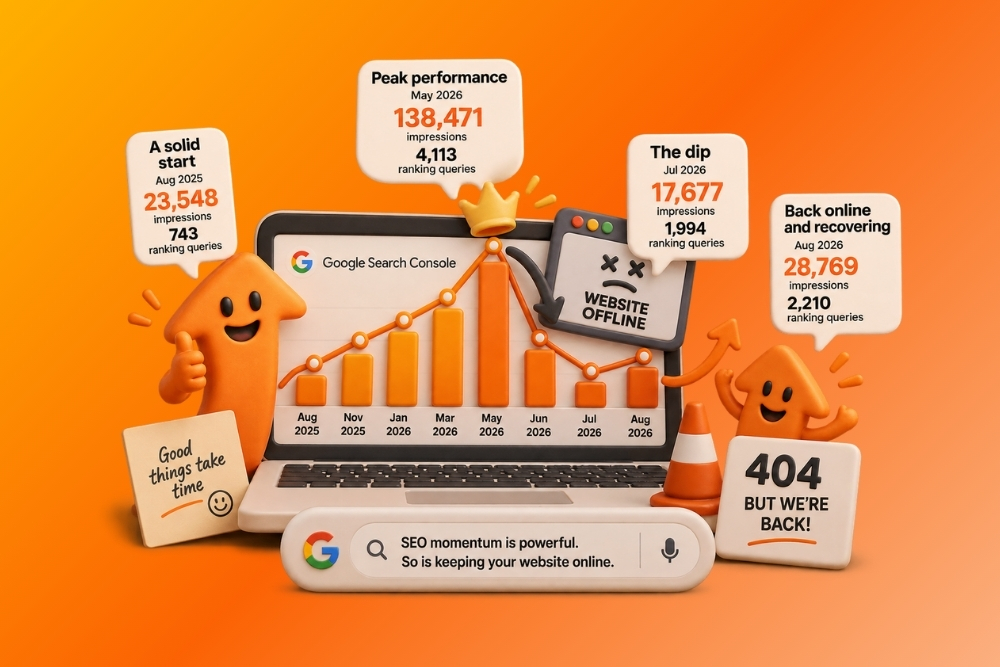


A website migration sounds exciting on paper.
New design. Better performance. Fresh start.
But in reality? It is one of the fastest ways to lose your ranking if your SEO website migration is not handled properly.
A site migration is not just moving from one platform to another. It is a full migration process that affects how every search engine understands your site. Change the wrong thing, and your search results can drop overnight.
I have seen it happen more times than I would like to admit. A business launches a beautiful new site, only to realise their traffic has quietly disappeared a week later.
That is why having a proper website migration checklist is not optional. It is your safety net.
The goal of any successful website migration is simple:
- Keep your existing SEO value
- Help Google and other search engines understand your changes
- Avoid unnecessary SEO issues
When done right, your migration SEO efforts can actually improve performance. When done wrong, it can undo years of work.
Types of Website Migration and SEO Impact
Not all site migration SEO projects are the same. The type of migration you are dealing with will shape your entire website migration strategy.
Common types of website migration
Here are the most common scenarios when migrating a website:
- Domain change: Moving from one domain to another. High risk if not handled with proper redirect mapping.
- URL structure changes: Updating your URL structure or cleaning up messy old URLs.
- Platform migration: Moving your current website to a new CMS or tech stack.
- Redesign or UX update: Launching a new website with changes to layout, content, and user experience.
Each of these impacts how a crawler interprets your site. And that directly affects your ranking.
Why migrations affect SEO
Every migration changes signals that search engines rely on:
- Your URLs on your site
- Internal linking structure
- Content on your website
- Technical SEO elements
If these are not handled correctly, you risk:
- Losing visibility in search results
- Breaking links to your site
- Confusing Google’s ability to crawl your site
A quick reality check from experience
One client came to us after a redesign. No domain change. No major content updates.
But they removed key pages and changed their URL paths without proper 301 redirect setup.
Traffic dropped by over 40 percent.
Not because of a bad product.
Not because of competition.
Just poor migration best practices.
Pre-Migration SEO Checklist and Planning
If there is one place where most migrations go wrong, it is here.
Not during launch.
Not after.
But before anything even starts.
A successful site migration begins with a solid plan.
Set clear migration goals
Start with the basics.
What is the goal of the migration?
- Better performance?
- Improved user experience?
- Cleaner website architecture?
Your migration goals will shape your entire SEO strategy.
Run a full SEO audit of your current site
Before you touch anything, understand what you already have.
A proper SEO audit should cover:
- Top-performing pages on your site
- Current SEO rankings
- Existing backlinks and links to your site
- Technical SEO health
This helps you protect what is already working.
Benchmark your performance
Use tools like:
- Google Analytics
- Google Search Console
- Tools like SEMrush
Track:
- Traffic levels
- Keyword rankings
- Conversion data
This gives you a baseline to measure your SEO performance after the migration.
Map out your URL structure
This is where many migrations fail.
You need a clear plan for:
- Existing old URLs
- New URL structure
- One-to-one mapping for every important page
No guessing. No shortcuts.
Every important page should have a destination on your new site.
Prepare your migration plan
Think of this as your blueprint.
A strong migration plan includes:
- Timeline for the migration project
- Responsibilities across your SEO team
- Technical SEO requirements
- Risk management steps
If your plan is vague, your results will be too.
Why this stage matters most
From experience, the difference between a smooth launch and a traffic drop usually comes down to planning.
Good planning makes the migration process feel controlled.
Bad planning turns it into damage control.
Ready to migrate your websitewithout losing your SEO?
Let our SEO experts handle the migration process while you focus on growing your business.
Technical SEO Setup Before You Migrate
This is where your SEO website migration checklist starts to feel real.
You have done the planning. Now it is time to make sure the technical side does not quietly ruin your successful site migration.
Set up a staging website properly
Before touching your live site, you need a staging website.
This is your testing ground.
It allows you to:
- Test your website changes safely
- Run a full site crawl using a website crawler
- Identify SEO issues before they go live
One thing I always tell clients.
If you skip staging, you are basically testing on your real audience.
Review your sitemap and site structure
Your sitemap is how you help Google understand your site.
Before launch:
- Update your sitemap with all new URLs
- Remove outdated or irrelevant pages from your old site
- Make sure your structure reflects your new website migration strategy
A messy sitemap leads to a messy crawl.
Prepare search engine tools
Set up and verify:
- Google Search Console
- Bing Webmaster Tools
These tools help you:
- Monitor how search engines crawl your new site
- Identify indexing issues
- Track early SEO signals
Technical SEO checks that actually matter
Focus on the essentials:
- Page speed and performance
- Mobile usability
- Indexability
- Clean code and structure
These are not just technical details. They directly affect your SEO and can influence your ranking within days after migration.
What I have learned the hard way
On a recent SEO site migration, everything looked perfect on paper.
But we skipped a deep crawl on staging.
After launch, search engines struggled to access key pages. It delayed indexing and slowed recovery.
Lesson learned.
If you want a successful migration, test everything before you go live.
Redirect Mapping and URL Strategy
If there is one part of a website migration process that you cannot afford to get wrong, it is this.
Your redirects.
Why redirects matter so much
When you migrate, your old URLs do not just disappear.
They carry:
- Authority
- Backlinks
- Historical SEO signals
Without proper handling, all of that is lost.
And that is where the negative impact on SEO usually begins.
Build a proper redirect plan
Every important page on your old website should map to a relevant page on your new site.
This is not optional. It is core to any seo migration checklist.
Use a simple structure:
- Old URL → New URL
No guesswork. No shortcuts.
Keep it clean and simple
Follow these best practices:
- Use direct one-to-one redirects
- Avoid redirect chains
- Avoid redirect loops
- Prioritise high-traffic and high-ranking pages
The size of your website will determine how complex this gets, but the principle stays the same.
Think beyond just URLs
Your website content and structure should also align with your redirect plan.
If you remove pages without replacement:
- You lose relevance
- You lose traffic
- You risk damaging your SEO rankings
A quick story from the field
We once audited a migration where over 30 percent of pages had no redirects.
The result?
Traffic dropped hard within days after migration.
Once we fixed the mapping, recovery started. But it took time.
Redirects are not glamorous.
But they are the backbone of a successful SEO migration.
On-Page SEO and Content Migration
Now let’s talk about something many teams underestimate.
Content.
During a site migration SEO project, it is not just about moving pages. It is about preserving value.
Do not lose what already works
Your existing website content holds your current rankings.
Before you migrate:
- Identify top-performing pages
- Preserve key content elements
- Keep your messaging consistent
This is especially important for maintaining your search results visibility.
Maintain internal structure
Your internal linking plays a big role in how search engines understand your site.
During migration:
- Keep logical internal links
- Update links to match your new URLs
- Avoid broken links
This helps search engines navigate your site and improves your chances of a successful seo outcome.
Avoid common content mistakes
Here is where many migrations go wrong:
- Removing content without analysing performance
- Rewriting pages without considering SEO impact
- Launching with incomplete or missing pages
These mistakes can quietly damage your ranking.
Align content with your new strategy
A migration is also an opportunity.
You can:
- Improve weak pages
- Update outdated information
- Align content with your current SEO strategy
But do it carefully.
Too many changes at once can confuse search engines and make it harder to measure what actually worked.
The goal of content migration
At the end of the day, your goal is simple:
- Maintain existing value
- Improve where it makes sense
- Avoid unnecessary disruption
When content, technical SEO, and redirects work together, your migration goes smoothly.
When one is off, everything feels it.
SEO Migration Checklist for Launch Day
This is where everything comes together.
Launch day is not the time to “hope it works”. It is where your SEO website migration checklist either protects your ranking or exposes gaps.
Run a final site check before going live
Before you flip the switch:
- Perform a full site migration process check
- Run a crawl of your new site
- Validate key pages and navigation
This step alone can catch issues that would otherwise hurt your search results.
Submit your sitemap and go live properly
Once live:
- Submit your updated sitemap
- Ensure search engines can access your new site
- Confirm indexing is allowed
This helps speed up discovery and reduces the risk of a slow recovery.
Check everything again post-launch
Yes, again.
After launch:
- Test key pages
- Review redirects
- Confirm tracking is working
A successful migration is rarely perfect on first release. The goal is to catch issues early.
Post-Migration SEO Monitoring and Fixes
Once your site is live, the real work begins.
This is where many assume the job is done. In reality, post-launch is where your SEO migration success is decided.
Monitor your rankings and traffic
Expect some movement. It is normal.
Track:
- Changes in seo rankings
- Traffic patterns
- Visibility in search results
This helps you understand the potential SEO impact of your migration.
Identify and fix SEO issues quickly
Common post-migration issues include:
- Missing pages
- Indexing problems
- Broken links
Fixing these early helps prevent long-term damage.
Give it time, but not too much time
Some fluctuations are expected in the first few days after migration.
But if things do not stabilise, it is a sign something is off in your migration SEO setup.
What we usually see
In most site migration SEO projects:
- Small dips are normal
- Recovery happens within weeks if done right
- Poor migrations take months to fix
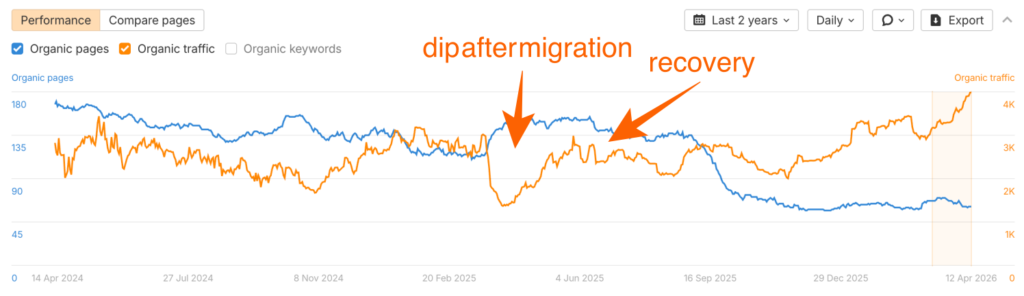
The difference is always in execution.
Common SEO Migration Mistakes to Avoid
Let’s be honest.
Most migration problems are not technical. They are avoidable mistakes.
Skipping parts of the checklist
A comprehensive website migration checklist exists for a reason.
Skipping steps leads to:
- Lost pages
- Broken journeys
- Drops in ranking
Underestimating the impact on SEO
A website migration is not just a design change.
It can:
- Affect your SEO signals
- Change how search engines see your site
- Impact your long-term visibility
Making too many changes at once
When migrating a website, avoid:
- Changing content, structure, and domain all at once
- Launching without testing
Too many variables make it harder to control outcomes.
Trying to rush the process
Every site migration process needs time.
Rushing leads to:
- Missed details
- Poor execution
- A negative SEO outcome
Local SEO and Special Considerations
If your business relies on location, local SEO adds another layer to your website migration strategy.
Keep local signals consistent
Make sure your:
- Business name
- Address
- Contact details
If your business relies on location, local SEO adds another layer to your website migration strategy.
Keep local signals consistent
Make sure your:
- Business name
- Address
- Contact details
remain consistent across your new site and external platforms.
Update key listings
After migration:
- Update Google Business Profile
- Check directory listings
- Ensure consistency everywhere
This helps maintain your local visibility in search results.
Why this matters more than you think
A poorly handled migration without local updates can lead to:
- Loss of local rankings
- Reduced visibility in map results
For local businesses, this can hit revenue quickly.
SEO Website Migration Best Practices for 2026
By now, you can see a pattern.
A successful SEO website migration is not about one thing. It is about doing many small things right.
Focus on the fundamentals
Strong best practices include:
- Clear planning
- Proper redirects
- Clean structure
- Consistent content
These are not new, but they are often ignored.
Think long-term, not just launch
Your SEO migration checklist should not end at launch.
Ongoing optimisation is part of a successful site migration.
Align migration with your SEO strategy
Every migration should support your bigger goals:
- Better user experience
- Stronger ranking
- Improved visibility
If it does not, you are just moving problems around.
How to Ensure a Successful Site Migration
A website migration is one of the most sensitive projects in SEO.
Done right, it can unlock growth.
Done wrong, it can undo years of progress.
The difference comes down to:
- Planning
- Execution
- Attention to detail
This SEO website migration checklist is designed to help you avoid the common pitfalls and focus on what actually drives results.
Need help with your SEO website migration?
If you are planning to migrate your site or already seeing drops in ranking, you do not have to figure it out alone.
At SEOBoost, we have handled migrations of all sizes, and we know how to ensure your transition is smooth and avoids unnecessary SEO issues.
If you want your migration to go smoothly without risking your traffic, get in touch.
Let’s make sure your next move is a successful site migration, not a costly mistake.