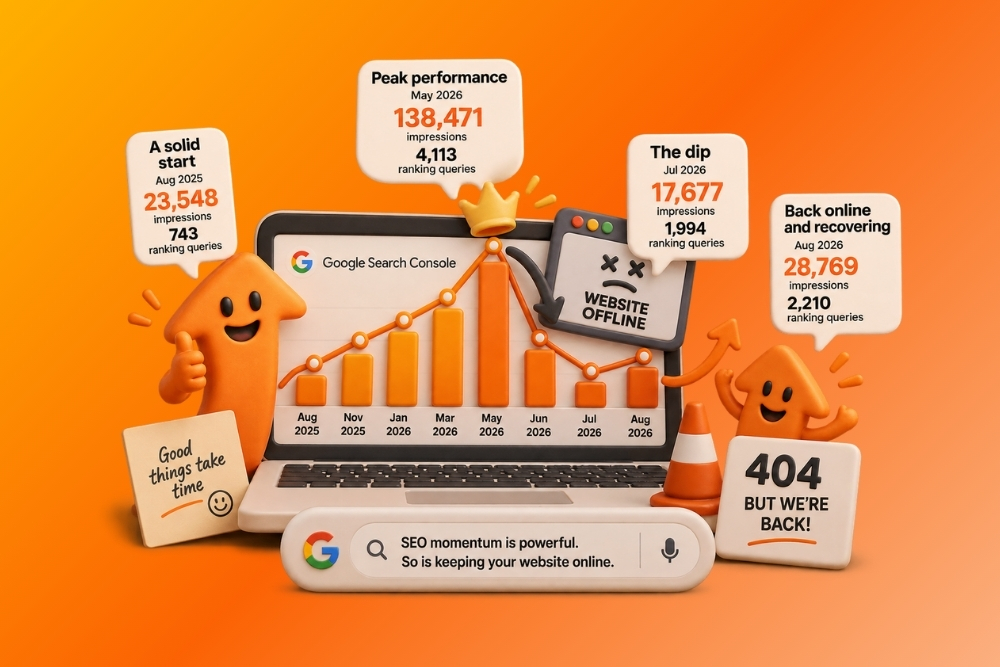


Over 90% of pages on the web get zero traffic from Google Search Console data, even though many ecommerce sites are packed with products, categories, and content.
Translation? Your ecommerce website can look great, function perfectly, and still sit invisible in search engine results.
That’s where SEO stops being “nice to have” and becomes survival.
If your ecommerce store isn’t showing up for the right keyword, your competitors are taking that traffic, those clicks, and those sales. And with AI changing how search engines like Google interpret search queries, the gap between ranking and disappearing is getting wider.
So, what is ecommerce SEO?
Ecommerce SEO, or search engine optimisation for an ecommerce site, is the process of optimizing your ecommerce website so it can rank higher in search engine result pages and drive traffic that actually converts.
Think of it as the system behind your visibility.
It covers everything from keyword research and on-page SEO to technical SEO, site structure, and backlinks. It also includes optimising every product page, category page, URL, and even your product description so search engines can understand your content and match it to the right search term.
In simple terms, ecommerce SEO helps search engines like Google and Bing connect your ecommerce content with people actively searching for what you sell.
Why this ecommerce SEO guide matters
Many ecommerce sites tend to treat SEO as a one-time setup, maybe a quick audit, a few meta descriptions, and done.
That approach does not work anymore.
Search engine optimization is ongoing. It involves regularly audit processes, fixing SEO issues like duplicate content, improving internal linking, and using tools like Google Analytics to track what is actually driving organic search performance.
The good news?
When done right, ecommerce SEO strategies do more than just rank higher in Google. They improve user experience, increase higher conversion rates, and turn your ecommerce marketing into a consistent traffic engine.
17 Ecommerce SEO Tips to Rank Higher and Drive Traffic
Think of ecommerce SEO as a system, not a checklist.
Search engine optimisation works best when every part of your ecommerce website, from structure to product pages, works together. These ecommerce SEO strategies are designed to help you improve ranking, increase visibility in search results, and build long-term SEO success.
Let’s start with the fundamentals.
1. Create your ecommerce website
Your ecommerce website is not just a storefront. It is the foundation of your entire ecommerce SEO strategy.
I have seen ecommerce owners obsess over logos for weeks. Then rush their ecommerce site structure in a weekend. That is like designing a beautiful shop with no doors.
Pick an ecommerce platform that supports strong SEO features. Clean code. Fast load times. Mobile-first design. These are not “nice to have.” They are ranking factors.
Think of your site as something built for both humans and google and other search engines. Because it is.
A well-built site is already doing half your search engine optimization work before you even write your first product description.
2. Perform keyword research
This is where most people either overcomplicate things or completely ignore them.Good keyword research is not about stuffing random terms. It is about understanding what your customers are actually typing into Google search at 2am.
Look at:
- Search volume
- Intent behind the target keyword
- Competition
Your goal is simple. Match your product pages with real searches.
If your product solves a problem, there is a keyword for it. You just need to find it.
This step alone can decide whether your store sits quietly… or climbs to the first page of search.
3. Design SEO-friendly URL structure
URLs are one of those things business owners ignore until it is too late.A messy URL is like giving directions that confuse everyone. Including search engines.
Keep it simple:
- Use your target keyword
- Avoid random numbers or symbols
- Make it readable for humans
Example:
- Bad:
/product?id=78493 Better:/organic-coffee-beans
Clean URLs are part of on-page SEO best practices. They help your pages rank better and improve user trust.
And yes, even your URL can be a subtle ranking factor.
4. Help Google understand your site structure
Imagine walking into a supermarket where nothing is labeled. Chaos.That is exactly how Google search feels when your ecommerce site architecture is unclear.
You need:
- Logical categories
- Internal links between pages
- Clear navigation
This is where technical SEO quietly does its job.
Add schema markup to give search engines more context about your products. It is like handing Google a cheat sheet.
When your structure makes sense, your entire search optimisation effort becomes stronger.
This is also where many brands discover issues during an audit. Broken links. Orphan pages. Duplicate content.
A quick fix here can unlock serious ranking improvements.
5. Optimise category pages
Most people focus only on product pages. Big mistake. Category pages are often your biggest opportunity to rank higher.Why? Because they target broader keywords with higher search volume.
Here is what works:
- Add keyword-rich descriptions
- Optimise your title tag
- Use internal link strategies to guide users
Think of category pages as mini landing pages. They are powerful when done right.
Strong category pages can anchor your entire ecommerce SEO efforts and drive consistent traffic.
6. Optimise product pages
Your product page is where browsing turns into buying. And yet, most pages read like they were written by a sleepy intern at 4pm on a Friday.If you want your ecommerce site to actually perform in google search, your product pages need to do three things:
- Answer questions
- Build trust
- Include the right keyword signals
Write descriptions that sound human. Use your keyword naturally, not like you are trying to win a stuffing contest.
Add:
- Clear benefits
- FAQs
- Reviews
This is not just about ranking. It is about conversion too. Because the real win is not just traffic. It is sales.
7. Improve on-page SEO elements
This is where the small details quietly carry your entire search engine optimisation effort.We are talking:
- Headings
- Meta descriptions
- Internal link structure
- Image alt text
These are classic on-page SEO best practices. Not exciting. Very effective.
Most founders skip this because it feels repetitive.
But here is the truth.
Consistency here is what separates random traffic from a successful SEO campaign.
Every page should be intentional. Every element should support your optimisation goals.
Think of it like tuning an engine. Small tweaks. Big difference.
8. Include structured data for ecommerce
If SEO had a cheat code, this would be close. Structured data helps search engines understand your ecommerce data better.
You are basically telling Google:
“Hey, this is a product. This is the price. These are the reviews.”
That clarity is great for SEO.
It can unlock rich results like:
- Star ratings
- Price snippets
- Availability
And suddenly your listing stands out… without spending a cent on ads.
This is one of those ecommerce SEO best practices that feels technical, but pays off quietly in the background.
9. Share product data with Google
Here is a missed opportunity I see all the time. Online store owners build a solid ecommerce website… and then never properly connect it to Google.Make sure your product data is synced via tools like Google Merchant Center.
Why it matters:
- Your products appear across more surfaces
- You improve visibility in google search
- You strengthen your overall ecommerce SEO strategies
More visibility means more chances to be discovered. And that is the entire game.
10. Optimise technical SEO
Now we get to the part everyone avoids. Technical SEO.It sounds intimidating. It is mostly just fixing what is broken.
Check:
- Site speed
- Mobile responsiveness
- Crawl errors
- Duplicate pages
This is where a proper audit becomes your best friend.
A slow or broken site will struggle to rank. No matter how good your content is.
Think of technical SEO like plumbing.
Nobody talks about it.
But when it fails, everything else stops working.
11. Check pagination and page loading
Pagination sounds boring. Because it is.
But if your category pages are split across multiple pages and not handled properly, your ecommerce site starts confusing search engines.
And confused systems do not reward you with better ranking.
Make sure:
- Pages are properly linked
- There is no duplicate content issue
- Navigation feels seamless
Now combine that with page speed.
A slow site is basically telling users,
“Hey… maybe come back later.”
They usually don’t.
Fast loading times are a core part of search engine optimisation and one of those quiet best practices that always pays off.
12. Optimise images for SEO
Big, beautiful images are great for conversions. Heavy, unoptimized images? Not so great for Google search.Here is the balance:
- Compress images without killing quality
- Use descriptive file names with a relevant keyword
- Add alt text
Search engines cannot “see” images. They rely on context.
This is a small tweak that supports your overall optimisation efforts and improves site speed at the same time.
Efficient and effective. Just how we like it.
13. Build high-quality backlinks
Let’s talk about the thing everyone wants… and few do right. Backlinks. Not all links are equal.A few strong, relevant backlinks can outperform hundreds of low-quality ones.
Focus on:
- Partnerships
- Guest content
- PR mentions
Think of each link as a vote of trust for your ecommerce website.
This is a core pillar of strong ecommerce SEO strategies and a major driver of long-term ranking.
Quick wins exist. But sustainable growth comes from credibility.
14. Encourage high-quality reviews
Reviews do two things beautifully:
- Build trust with humans
- Send fresh signals to search engines
And yes, e-commerce seo helps amplify both.
Encourage customers to leave detailed, honest feedback.
Not just “Great product.”
But why it is great.
This kind of content naturally adds depth to your pages and supports your broader search engine optimisation strategy.
Plus, more reviews often mean better click-through rates from google search.
Social proof meets SEO. Win-win.
15. Focus on UX and conversion signals
Here is something people forget. SEO does not end at the click. If users land on your ecommerce site and bounce instantly, it sends a signal. Not a great one.
Good UX means:
- Easy navigation
- Clear calls to action
- Clean design
When users stay longer and interact more, your site sends positive signals back to search engines. This is where effective SEO goes beyond keywords. Because the real goal is not just to rank. It is to convert.
16. Use Ecommerce SEO Tools
You do not need to guess your way through this.There are tools that can show you:
- What keywords you are ranking for
- Where you are losing traffic
- What needs fixing
Using the right tools makes your ecommerce SEO guide actionable, not theoretical.
It helps you move from “I think this is working” to “I know this is working.”
And that is how a successful SEO campaign is built.
17. Run regular SEO audits
If you only take one habit from this entire list, take this one. Regularly audit your site. Because things break. Pages change. Algorithms evolve.
A proper audit helps you:
- Catch issues early
- Maintain strong ranking
- Stay aligned with best practices
Think of it like going to the gym. One session does nothing. Consistency changes everything.
Need to grow your ecommerce traffic & sales?
Must-Have Ecommerce SEO Tools
If you want to rank higher in Google search, tools are your unfair advantage.
The right ecommerce SEO tools help you uncover keyword opportunities, fix issues fast, and scale your SEO efforts like a pro. Whether you’re a new ecommerce brand or working with an SEO company, these tools are essential.
| Tool | Description |
|---|---|
| Google Search Console | Monitor performance, indexing, and search visibility directly from Google. |
| Google Analytics | Track traffic, user behaviour, and conversion data across your ecommerce website. |
| Ahrefs | Powerful for backlink analysis, keyword research, and competitor insights. |
| SEMrush | All-in-one SEO platform for keyword tracking, site audit, and SEO strategies. |
| Screaming Frog SEO Spider | Ideal for deep technical audits and identifying crawl issues. |
| Ubersuggest | Beginner-friendly tool for keyword ideas and SEO opportunities. |
| Moz Pro | Great for tracking rankings and improving overall SEO performance. |
| Surfer SEO | Helps optimise on-page SEO based on real-time data. |
| Yoast SEO (for WordPress) | Easy on-page optimisation for product and category pages. |
CommonEcommerce SEO Mistakes That Hurt Ranking
Even solid ecommerce SEO strategies can fail if you’re making the wrong moves.
Many ecommerce websites struggle in Google search not because lack of effort, but because of avoidable mistakes that quietly damage ranking and search engine optimization performance.
Here’s what to watch for:
- Skipping keyword strategy: Targeting the wrong keyword, or none at all, leads to poor visibility and wasted SEO efforts
- Duplicate or thin product content: Copy-paste descriptions don’t rank, and they won’t convert either
- Ignoring technical SEO issues: Slow pages, broken links, and crawl errors can block your entire ecommerce site from ranking
- Weak internal linking: If your pages aren’t connected, search engines can’t understand your structure
- No regular audit process: Without ongoing audit checks, problems build up and rankings drop over time
- Chasing shortcuts over best practices: Spammy tactics might work short term, but they won’t last in Google search
How to Choose theRight SEO Company for Ecommerce Success
Not all SEO companies understand ecommerce.
Choosing the right partner can be the difference between slow growth and a scalable, successful SEO strategy that actually delivers results.
Here’s what to look for in an SEO company:
- Proven ecommerce SEO experience: SEO for ecommerce sites is different. You need a team that understands product pages, site structure, and conversion
- Clear strategy, not vague promises: A good SEO company will walk you through their approach to ranking, optimisation, and growth
- Focus on long-term results: Real search engine optimisation takes time. Avoid anyone promising instant rankings
- Strong audit and reporting process: You should get regular updates, insights, and performance tracking
- Alignment with SEO best practices: The right partner follows Google guidelines, not shortcuts
Think of it this way, your ecommerce SEO guide gives you the roadmap. The right SEO company helps you execute it faster and more effectively.
Turn This Ecommerce SEO Guide into Real Growth
By now, you’ve seen that ecommerce SEO is the process of building visibility, authority, and consistent traffic over time.
From technical setup to optimisation, from keywords to audits, every step in this guide to ecommerce SEO plays a role in helping your ecommerce website rank higher in Google search.
But here’s the reality.
SEO is powerful, but it’s also time-consuming. And many ecommerce businesses don’t have the bandwidth to execute everything at the level needed for real results.
That’s where we come in.
If you’re serious about scaling your ecommerce site, improving ranking, and building a sustainable traffic engine, SEOBoost can help.
We specialise in ecommerce SEO, combining proven best practices, data-driven strategies, and hands-on execution to deliver measurable growth.
Ready to rank higher and drive more traffic? Get in touch with us and let’s turn your SEO into a revenue channel.