
Search traffic is not the problem for most businesses. The real issue is what happens after users arrive.
You can rank well, attract clicks, and still see poor conversions. That usually comes down to one thing: misaligned search intent.
If your content does not match the intent behind a search query, it will struggle to perform. That applies to rankings, engagement, and ultimately revenue. In this guide, we will break down how search intent shapes modern SEO, and how to optimise your content to align with it.
What Is Search Intent and Why It Is Important for SEO
Search intent refers to the reason behind a user’s search. It is what someone actually wants when they type a query into a search engine.
Understanding search intent is critical because search engines like Google no longer rank content based on keywords alone. They focus on matching results to user intent.
What does search intent actually mean in practice?
When someone enters a search term, they are not just looking for words. They are looking for a specific outcome.
For example:
“What is search intent” → informational intent
“Best SEO agency UK” → commercial intent
“Hire SEO agency London” → transactional intent
Each query reflects a different stage in the decision-making process. If your content does not align with that intent, it will not meet user expectations.
Why search intent is important for SEO
Search intent is important for SEO because it directly influences rankings, engagement, and content performance.
Search engines analyse user behaviour signals such as:
Click-through rate
Time on page
Bounce rate
If users do not find what they need, they leave. That signals to the search engine that your content is not relevant.
How search engines interpret user intent today
Modern search engines use semantic understanding, machine learning, and AI search systems to interpret user intent.
This means:
Keywords are interpreted in context
Entities and topics matter more than exact phrases
Search engine results pages (SERPs) adapt to intent
Understanding and optimising for search intent helps search engines understand your content and rank it more accurately.
Fix intent gaps, improve SEO results
If your content attracts clicks but not action, review the intent behind each page. Small adjustments can improve relevance, rankings, and real outcomes.
Why Content Fails Without Search Intent Alignment
Many businesses create content based on keyword search volume. That approach often misses the intent behind the query.
Ranking without results: where content goes wrong
It is possible to rank for a keyword and still fail to convert. This happens when the content does not match the user’s expectations.
For example:
A blog post ranking for a transactional keyword
A product page targeting informational intent
This mismatch creates friction and leads to poor performance.
Common intent mismatches in SEO content
Some of the most common issues include:
Targeting broad keywords without understanding intent
Creating informational content for commercial queries
Ignoring search engine results page formats
These mistakes reduce relevance and limit your ability to compete.
How poor intent alignment impacts ranking and conversions
Search engines prioritise content that satisfies user intent. If your content fails to do that, rankings will drop over time.
Poor alignment leads to:
Lower engagement
Reduced trust
Fewer conversions
Getting intent right improves both visibility and business outcomes.
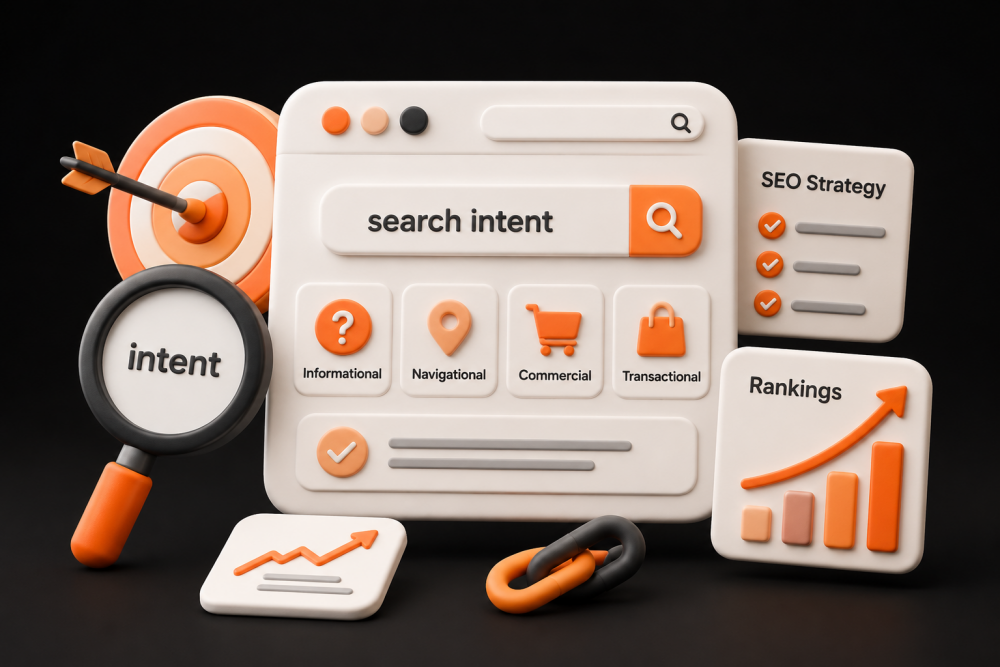
Types of Search Intent You Need to Understand
To optimise for search intent, you need to understand the different types of search intent and how they influence content.
Informational search intent
Informational intent occurs when users want to learn something.
Examples include:
“What is SEO”
“How to optimise content”
Content for informational search intent should educate and provide clear answers.
Navigational search intent
Navigational search intent happens when users are looking for a specific brand or website.
Examples:
“Ahrefs blog”
“SEOBoost homepage”
Users already know where they want to go. Your role is to ensure your brand is visible.
Commercial search intent
Commercial intent sits between research and decision-making.
Examples:
“Best SEO tools”
“Top SEO agencies UK”
Users are comparing options. Content should support evaluation and build trust.
Transactional search intent
Transactional intent indicates that users are ready to take action.
Examples:
“Buy SEO services”
“Hire SEO consultant”
This type of content should focus on conversion, clarity, and value.
Why intent categories alone are not enough
While these intent categories are useful, real search behaviour is more nuanced.
Search intent can shift depending on:
Query wording
Context
SERP features
Understanding search intent requires analysing real search engine results, not just relying on predefined categories.
How to Determine Search Intent Effectively
Knowing the types of search intent is only the first step. The real challenge is determining intent for specific keywords.
How to analyse search engine results pages
The best way to determine search intent is by analysing the search engine results page (SERP).
Look for:
Content formats (blogs, product pages, guides)
Featured snippets
Video results
Product listings
These elements reveal what search engines believe users want.
What keywords alone cannot tell you about intent
Keywords provide limited insight into user intent.
For example, a keyword like “SEO tools” could indicate:
Informational intent
Commercial intent
Without analysing the search results, it is difficult to determine intent accurately.
Using search features and patterns as signals
Search features such as “People also search” and AI-generated summaries provide additional insight into intent.
By analysing these patterns, you can better understand:
User expectations
Content gaps
Opportunities to optimise
How Search Intent Improves SEO Strategy and Rankings
Search intent is not just a content concept. It is a core part of your SEO strategy.
Aligning content with user intent across the funnel
A strong SEO strategy maps content to different stages of the customer journey.
For example:
Informational content builds awareness
Commercial content supports evaluation
Transactional content drives conversions
This approach improves both visibility and performance.
Improving ranking stability with intent-driven content
Content that matches search intent tends to perform better over time.
It aligns with what users expect, which leads to:
Higher engagement
Better rankings
More consistent traffic
How intent supports semantic SEO and topical authority
Search intent plays a key role in semantic SEO.
By covering different types of user intent within a topic, you:
Build topical authority
Strengthen relevance
Improve discoverability in AI search
How to Optimise Content for Search Intent
Once you understand search intent, the next step is optimisation.
How to optimise existing content for better intent alignment
Start by reviewing your current content.
Ask:
Does this match the intent behind the search query?
Does it meet user expectations?
If not, update the content structure, messaging, and format.
How to create content that matches user intent from the start
When creating content, focus on intent first, not keywords.
Steps include:
Analyse search results
Identify intent patterns
Structure content accordingly
This ensures your content is aligned from the beginning.
Balancing SEO, user experience, and conversion goals
Optimising for search intent is not just about rankings. It is about delivering value.
Good content should:
Answer user questions clearly
Provide relevant information
Guide users towards action
Search Intent in the Age of AI and Evolving Search
Search behaviour is changing. AI search is reshaping how users interact with content.
How AI search is changing intent interpretation
AI systems interpret queries in a more conversational way.
This means:
Queries are longer and more specific
Context matters more
Search intent is more complex
Why search intent is critical in AI-driven search results
AI-generated results prioritise content that is clear, structured, and relevant.
If your content does not align with user intent, it is less likely to be included in AI summaries.
Optimising for discoverability beyond traditional rankings
Modern SEO is about more than rankings.
To stay visible, you need to:
Create content that answers real questions
Structure content clearly
Build authority across topics
Common Mistakes to Avoid When Optimising for Search Intent
Even experienced marketers make mistakes when working with search intent.
Over-focusing on keywords instead of intent
Keywords are important, but they are not enough. Intent should guide your strategy.
Misclassifying intent categories
Not all queries fit neatly into one category. Avoid oversimplifying intent.
Ignoring SERP signals and user behaviour
Search engine results provide valuable insights. Ignoring them leads to poor decisions.
Creating content without a clear purpose
Every piece of content should have a defined goal. Without that, performance suffers.
Is Your SEO Strategy Built Around Search Intent?
Search intent is no longer optional. It is a core part of modern SEO and content strategy.
If your content is not aligned with user intent, it will struggle to perform. That affects rankings, traffic, and conversions.
The good news is that this is fixable.
By focusing on understanding search intent, analysing search results, and optimising content accordingly, you can build a more effective SEO strategy.
If you are looking to improve your visibility, strengthen your content performance, and adapt to modern search behaviour, it may be time to rethink your approach.
Explore how SEOBoost can help you align your SEO strategy with search intent and build sustainable organic growth.